A Very Brief Introduction to How Trauma Affects the Brain
published 4/30/17; updated 5/31/23

image courtesy Dr. Sam Himelstein
Dr. Sam Himelstein, Center for Adolescent Studies
The brain can be simply categorized into three layers, all with distinct functions relevant to the processing of danger and trauma:
Hindbrain: Also known as the reptilian brain, the hindbrain deals with all of the essential functions like breathing (i.e., processes you don’t need to think about).
Midbrain: Also known as the emotional brain, this part of the brain contains the limbic system and assesses danger.
Forebrain: Also known as the logical brain, this part of the brain controls functions such as thinking and abstract reasoning.
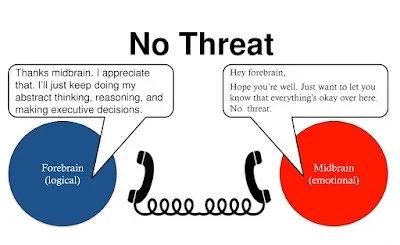
image courtesy Dr. Sam Himelstein
When someone is in NOT in danger, communication between the midbrain and forebrain is relatively stable; i.e., a person’s executive function and rational brain are intact.
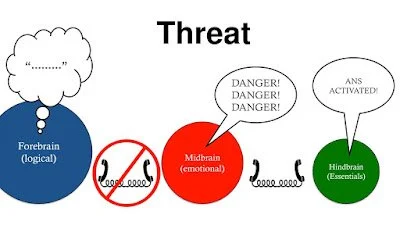
image courtesy Dr. Sam Himelstein
When someone IS in danger, the thinking brain shuts down and communication between the forebrain and rest of the interpretive centers ceases to exist. The midbrain assesses danger, and the autonomic nervous system (ANS) goes into fight, flight, or freeze mode.

image courtesy Dr. Sam Himelstein
Individuals who are traumatized have the potential to misinterpret neutral and non-dangerous stimuli as dangerous.
This is critical to understand when viewing youths’ behavior through a trauma-informed lens. Adolescents are often perceived as being intentionally rude, aggressive, or disrespectful when they may actually be unconsciously defending themselves against further trauma.
The online course Trauma Basics for Youth Workers includes more detailed information about what trauma is, how it impacts learning and the brain, and the core aspect of trauma-informed care every youth worker should know

About the Author
Sam Himelstein, Ph.D. is a licensed psychologist and the founder of both Family Spring, a mental health company that serves teens, young adults, and their families; and the Center for Adolescent Studies, an interdisciplinary training institute focused on trauma-informed care, mindfulness, substance use disorder, resilience, and related training for professionals.
Dr. Himelstein is the author of Trauma-Informed Mindfulness With Teens, Mindfulness-Based Substance Abuse Treatment for Adolescents, and A Mindfulness-Based Approach to Working with High-Risk Adolescents.
Related Posts
There are many more resources here at MindfulTeachers.org on trauma-informed practices, including the following posts:
You may also be interested in these ‘very brief introductions’: